Accelerating the Green Transition – OTP Group Launches a Regional Dialogue
published atMay 13, 2026Tags:sustainability
Accelerating the Green Transition – OTP Group Launches a Regional Dialogue
How can the sustainability transition be translated into actual business decisions, measurable risks, and financeable projects? These practical questions were at the center of ESG Summit 2026, organized by the OTP Group in Budapest in May 2026. Representatives of the financial sector, regulatory institutions, academia, and the corporate sphere jointly discussed how the green transition in the region can be accelerated through applicable methodologies and financial instruments.
The green transition is a key environmental pillar of ESG—the framework that describes economic, social, and environmental responsibility. It represents the gradual transformation of the economy - from energy consumption and building stock to transportation and corporate operations. Its objective is to create an economy that operates more efficiently, with lower emissions and greater resilience in the long term. This process is not merely an environmental issue: it also affects household energy consumption and utility costs, corporate investment decisions, and the long-term stability of jobs. For the financial sector, including the OTP Group, this is of particular importance, as financing decisions significantly shape clients’ ability to adapt, while risk management and the exploration of new business opportunities also influence the pace of the sustainable transition.
The OTP Group hosted its annual sustainability event in Budapest in May 2026, bringing together financial, institutional, and corporate stakeholders from multiple countries for a shared dialogue. Throughout the event, the focus remained firmly on implementation: how sustainability goals can become operational at the level of everyday economic decision-making.
Intersections of Science, Regulation, and Markets
During the event, participants agreed that sustainability issues can no longer be treated as a standalone field. The interaction between scientific findings, regulatory frameworks, and market decisions determines when ESG can become a functioning practice on a large scale. Speakers emphasized that ESG is increasingly becoming an integral part of risk management and capital allocation, particularly in climate risk assessment, stress testing, and corporate lending decisions.
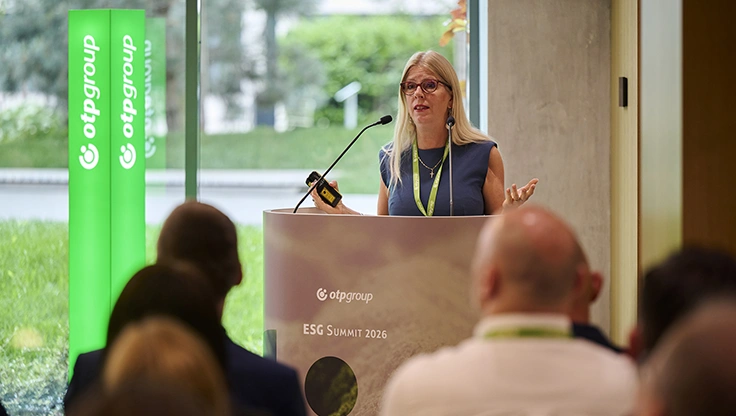
The keynote speaker of the event, Diána Ürge-Vorsatz, climate scientist and Vice-Chair of the United Nations Intergovernmental Panel on Climate Change (IPCC), reinforced this message: "Central Europe is warming almost 3 times faster than the global average. Every fraction of a degree of global warming matters, and every year of delayed action increases both economic damages and human losses. Yet the transition can also create enormous opportunities for innovation, efficiency, and resilience. Financial institutions therefore have a uniquely important role in helping turn climate ambition into real-economy transformation away from fossil related investments towards green solutions."
Measurability
as a Key Issue
A recurring message throughout the Summit was that sustainability can only be integrated into financial operations if it becomes measurable. Through concrete examples, participants demonstrated methods for quantifying climate risks, applying climate stress tests, and integrating ESG considerations into corporate lending.
More accurate measurement increases the predictability of financing decisions, while also highlighting regional differences in data availability, ESG maturity, and regulatory environments.
Financing as a Critical Condition
The financial dimension of the green transition was explored from multiple perspectives during the event. There was a broad consensus that the transition can only be accelerated if regulatory incentives, investor expectations, and banking product development reinforce one another. The sustainability toolkit of the Central Bank of Hungary (MNB), the future of green investments, and specific financing cases were all among the topics discussed.
Sustainability is a defining principle in OTP’s operations
The professional topics discussed at the event are already reflected in the operations of the OTP Group today and are increasingly embedded in daily decision-making processes. By the end of 2025, the Group’s green financing portfolio had reached HUF 1,697 billion (approximately EUR 4.44 billion), exceeding the target of HUF 1,500 billion (approximately EUR 3.93 billion) set four years earlier by 13%.
The volume of green lending has grown at an outstanding pace in recent years, showing annual growth of 85% compared to 2022, while its share within the total loan portfolio increased from 1.4% to 6.3%, at the same time, the emissions intensity of the financed portfolio is decreasing.
According to the Group’s expectations, both the volume and proportion of green financing will continue to increase in the coming years, although on a more balanced and mature growth path following the earlier rapid expansion. Accordingly, the OTP Group has set a green financing target of HUF 2,123 billion (approximately EUR 5.56 billion) for 2028, building on the further strengthening of what is already a well-established and widely used financing category.
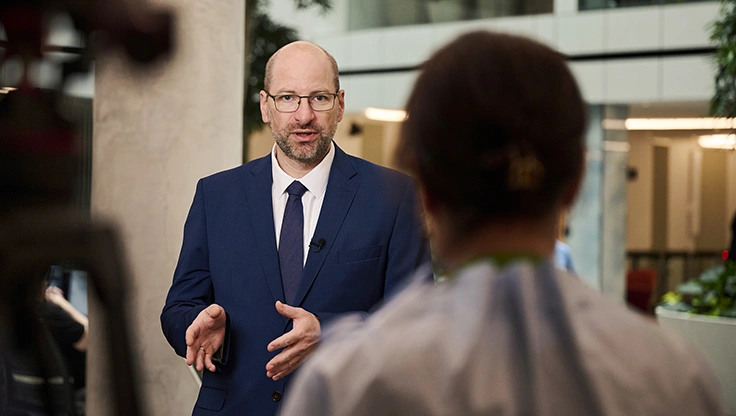
“Sustainability is not a standalone initiative for us, but a mindset deeply embedded in our operations. The OTP Group aims to offer financing solutions that create real economic value while contributing to addressing environmental and social challenges. This event also demonstrates that shared thinking and partnerships are essential for successful implementation,” said Gergely Pókos, Managing Director of the Green Program Directorate at OTP Bank.
The sustainability performance of the OTP Group
has also been regularly recognized internationally: in recent years, the Group
has received numerous prestigious professional awards, including recognitions
by Global Finance and the Joint
Venture Association.
Sustainability Is Driven by People
At the same time, the Summit also highlighted the importance of internal initiatives within the organization. As part of the event, the OTP Group announced for the first time the OTP Green Impact Award – “Make It Matter” and the OTP Social Impact Award – “Make It Human”, aiming to increase visibility and encourage sustainability and social impact projects initiated by employees.
The high number and quality of submissions clearly demonstrate that ESG is becoming increasingly present within the Group not only at the strategic level, but also in everyday operations and individual initiatives — reinforcing that the real driving force behind the sustainable transition lies in the knowledge, commitment, and proactivity of people within the organization.